
The Franchise Heir
When El Mencho died, Southern Pulse argued the franchise would survive the founder. It did. The harder question is who holds the financial network together now that the founder is gone.

Nemesio Oseguera Cervantes, aka El Mencho, was reportedly buried in early March 2026, two weeks after Mexican special forces killed him in Tapalpa, Jalisco. The ceremony was quiet, controlled, and closely watched. Before the mourners had left, Juan Carlos Valencia González had already begun consolidating control of the Jalisco New Generation Cartel (CJNG), the organization El Mencho had spent 15 years building into the most powerful criminal network in the Western Hemisphere.
Valencia González was not an unknown quantity. The Mexican and US governments had both tracked him for years under the aliases El Pelón, El 03, and R3. Born 12 September 1984 in Santa Ana, California, he carried dual nationality and a USD5 million bounty on his head. The US Department of Justice had indicted him in Washington on drug trafficking charges, and again in New York in October 2025 on money laundering and material support for a terrorist organization. He was 41 years old when he stepped forward.
By mid-March 2026, the Wall Street Journal had confirmed that Valencia González, the man who ran the CJNG’s elite armed wing, had moved to the head of the cartel itself. The structural conditions that made his rise possible are a more complicated story than the succession narrative suggests.
Guns, Blood, and the Family Bank
Valencia González’s path to the top of the CJNG runs through two distinct inheritance lines: a monopoly on lethal force and financial control.
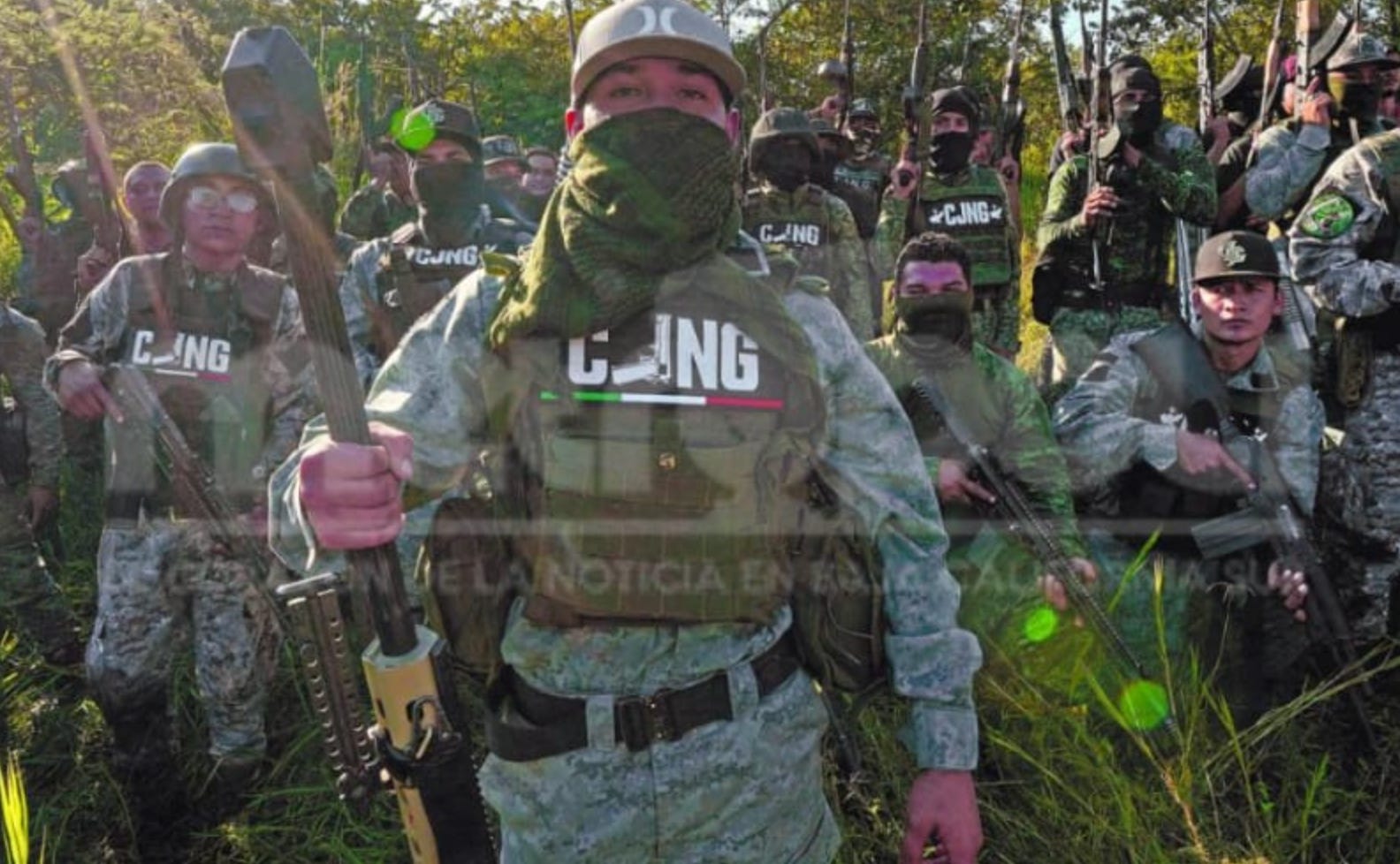
First, the guns: when Mexico’s then-secretary of national defense, Luis Cresencio Sandoval, publicly identified Valencia González, aka El Pelón, in July 2020, he described him as the founder and commander of Grupo Élite, the CJNG’s most capable armed wing. Grupo Élite emerged in 2019 and was built by former military personnel running clandestine training centers, with operations spanning Michoacán, Zacatecas, Jalisco, and Guanajuato. Valencia González assembled that force and put it in the field. When El Mencho needed a massacre answered or a rival pushed back, Grupo Élite was the instrument.
Second, the money: Valencia González’s mother, Rosalinda González Valencia, was the CJNG’s chief financial operator and a co-founder of Los Cuinis, the cartel’s money laundering and asset management wing. Her brother, Abigael González Valencia, ran Los Cuinis until his extradition to the United States, where he faced trial in Washington in August 2025. Rosalinda herself was arrested in November 2021, sentenced to five years in a Mexican maximum-security prison in 2023, and released early for good behavior. She was free when El Mencho died. Through her, Valencia González holds the closest surviving connection to the financial architecture that has kept the CJNG solvent across 15 years of expansion.
This dual inheritance gave him an advantage that neither El Jardinero nor any other regional operator could replicate. Audias Flores Silva controls narco-laboratories and vast territorial operations across five states. But Flores Silva carries an active Mexican arrest warrant. This is a heavy tax on his movement inside Mexico and warlord entrepreneur ambitions. When El Mencho’s funeral ended and the succession opened, Valencia González moved first.
As Southern Pulse argued at El Mencho’s death, the CJNG was never organized around a single leader. It was organized around a brand, a franchise model where regional operators made autonomous decisions within a shared criminal infrastructure, a sort of criminal franchise model. Valencia González did not inherit a throne so much as a board seat. The franchise keeps running regardless. He inherited the authority to represent the brand and the financial network that funds it.
Two Pillars, One Question
Analysts are asking who runs the CJNG now. The more useful question is what the new leadership position actually confers, and what’s required to hold it.
Valencia González commands the guns. Grupo Élite gives him coercive reach across the cartel’s most contested territories. But the CJNG’s regional franchisees are well diversified, from the fuel thieves in Tamaulipas, the fraud operations in Puerto Vallarta, to the territorial armies in Michoacán. They do not need his authorization to operate. They never did. They need the financial infrastructure: the laundering channels, the corruption networks, the capital flows that let criminal revenue become legitimate assets. That infrastructure runs through Los Cuinis, and Los Cuinis runs through the González Valencia family.
But this financial connection is fragile. Abigael González Valencia is in US custody, facing trial in Washington. His testimony reaches into the precise financial architecture that Valencia González now depends on to hold the franchise together. The Cuinis’ laundering operations have been partially absorbed into the broader CJNG structure, but the senior figures who understood that architecture most completely are gone: arrested, extradited, or dead. Each removal made the network harder to operate and easier for US prosecutors to map and destroy.
Rosalinda’s freedom is Valencia González’s most important current asset. She built the financial side of this organization alongside her brothers, and she remains the clearest line of continuity between the Cuinis network as it was and what survives today. Her exposure to a potential US extradition request is unresolved. The guns hold the territory. The family holds the money. Valencia González needs both pillars standing to hold the cartel together. The financial pillar shows signs of wear and tear. It may crack.
Born in California, Running in Jalisco
El Mencho built a franchise, not a dynasty. As Southern Pulse documented at the time of his death, the cartel’s regional operators kept running through and beyond El Mencho’s death because the system was built for that contingency. Valencia González does not change that logic. He manages the brand and controls the financial nerve center that regional franchisees depend on. The franchise runs itself. His tenure as chief will likely be determined by his access to keep the financial network together, as well as the strength of arms and men to keep his enemies at bay.
Abigael González Valencia is talking to prosecutors in Washington. Rosalinda is free in Mexico, for now. Her son commands a paramilitary force, and carries two US federal indictments and a heavy bounty on his head. So he’s certainly on Washington’s radar. Valencia González did not choose the family he was born into. He chose to lead it. That choice, and what it costs him, is the next chapter of the CJNG story.
By Southern Pulse | AI Assisted | 100% Human Verified
Whether it’s in Mexico or elsewhere in Latin America, Southern Pulse has the experience, network, and relationships to answer your most challenging strategic questions.